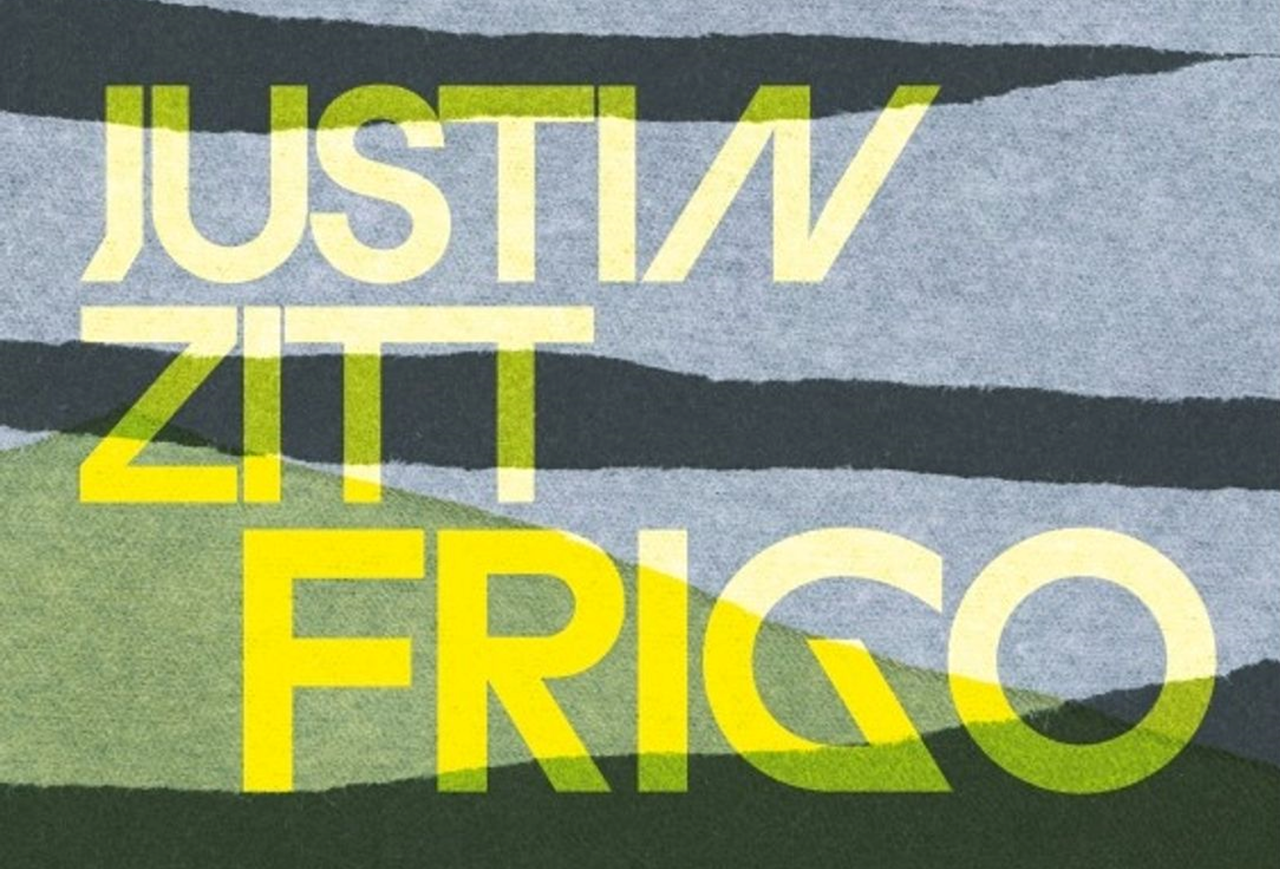
FRIGO
A colorful debut album in the piano trio format, shaped by modern creative jazz, compositional depth and a strong personal voice.
Piano trio
UNIT Records
Released in October 2025
Biography
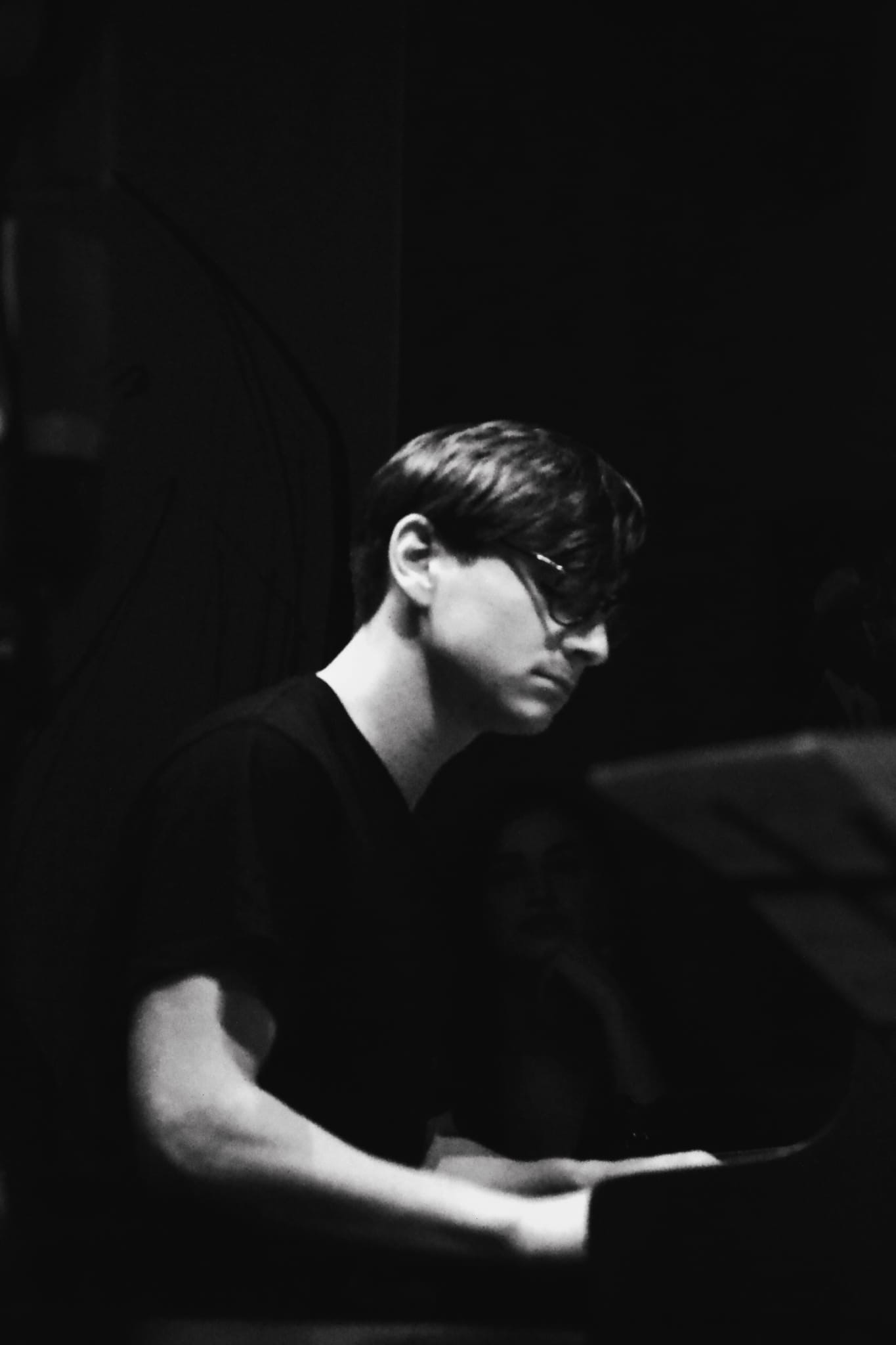
Justin Zitt is a 23-year-old German jazz pianist based in Amsterdam. His piano playing is energetic, spontaneous and creative. With a natural sense of virtuosity on the instrument, his music remains fresh and alive. In his compositions, he explores complex concepts whose improvisational interpretation turns the abstract into something vivid and compelling.
He is currently pursuing his master’s degree in Jazz Performance at the Conservatorium van Amsterdam. Most recently, he spent an exchange semester at The New School in New York, where he studied with Micah Thomas and Matt Mitchell, among others.
He won first prize at the 8th International Piano Competition in Freiburg. He was a member of the Gutenberg Jazz Collective (2022/23) at Jazz Campus Mainz and was awarded the Deutschlandstipendium. Since 2024, he has also been a scholarship holder of the Kunststiftung Baden-Württemberg. In October 2025, his debut album FRIGO was released on UNIT Records. Critics praised it for bringing a personal approach to the piano trio format while confidently drawing on influences from modern jazz, avant-garde and contemporary classical music.
Justin Zitt began playing piano at the age of five. Later, his teacher Christoph Gärtner introduced him to gospel music and gave him the opportunity to accompany his gospel choir. These first concert experiences at the age of 13 were highly formative and laid an important foundation for band interaction and rhythmic skills, which he continued to develop over the following years.
His growing interest in jazz led him to join the “Jazz Juniors” support program of the state of Baden-Württemberg. He was then accepted into the preparatory program at the HMDK Stuttgart with Professor Hubert Nuss. After turning 18, Justin began studying jazz piano in Mannheim with Professor Rainer Böhm and Lorenz Kellhuber. During this time, he further developed his virtuosic improvisational skills and eventually won the International Piano Competition Freiburg (2022), became part of the Gutenberg Jazz Collective at Jazz Campus Mainz (2022/23), and received a scholarship from the Kunststiftung Baden-Württemberg (2024).
Since summer 2024, he has been pursuing his master’s degree in Jazz Performance at the Conservatorium van Amsterdam with Harmen Fraanje. As part of this program, he was also given the opportunity to complete an exchange semester at The New School in New York.
As part of the Gutenberg Jazz Collective, he performed with artists such as Ingrid Jensen, Kris Davis, Becca Stevens, Billy Hart and Ben Street. His concert activity has taken him throughout Germany as well as to France, the Netherlands, the United Kingdom, the United States, Kenya and Zanzibar, where he has played with renowned musicians including Rich Perry, Wanja Slavin, Mareike Wiening, Nils Landgren, Phil Donkin, Menzel Mutzke, Alex Goodman, Stefan Karl Schmid, Peter Gall and Fabian Arends.
Media
Projects
A colorful debut album in the piano trio format, shaped by modern creative jazz, compositional depth and a strong personal voice.
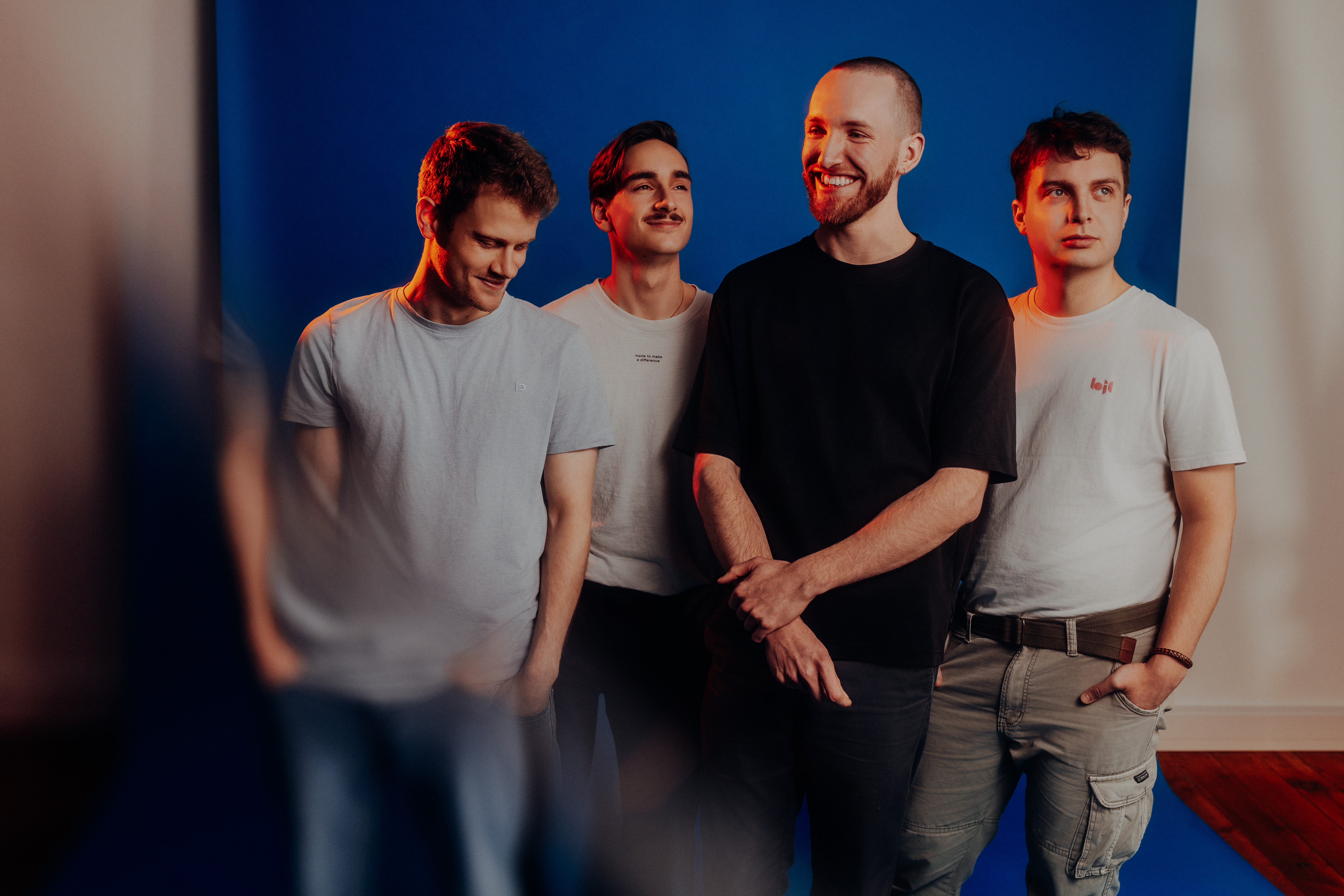
A project between modern jazz, indie, progressive rock and pop - focused into a multilayered, energetic band sound.
Live
Contact