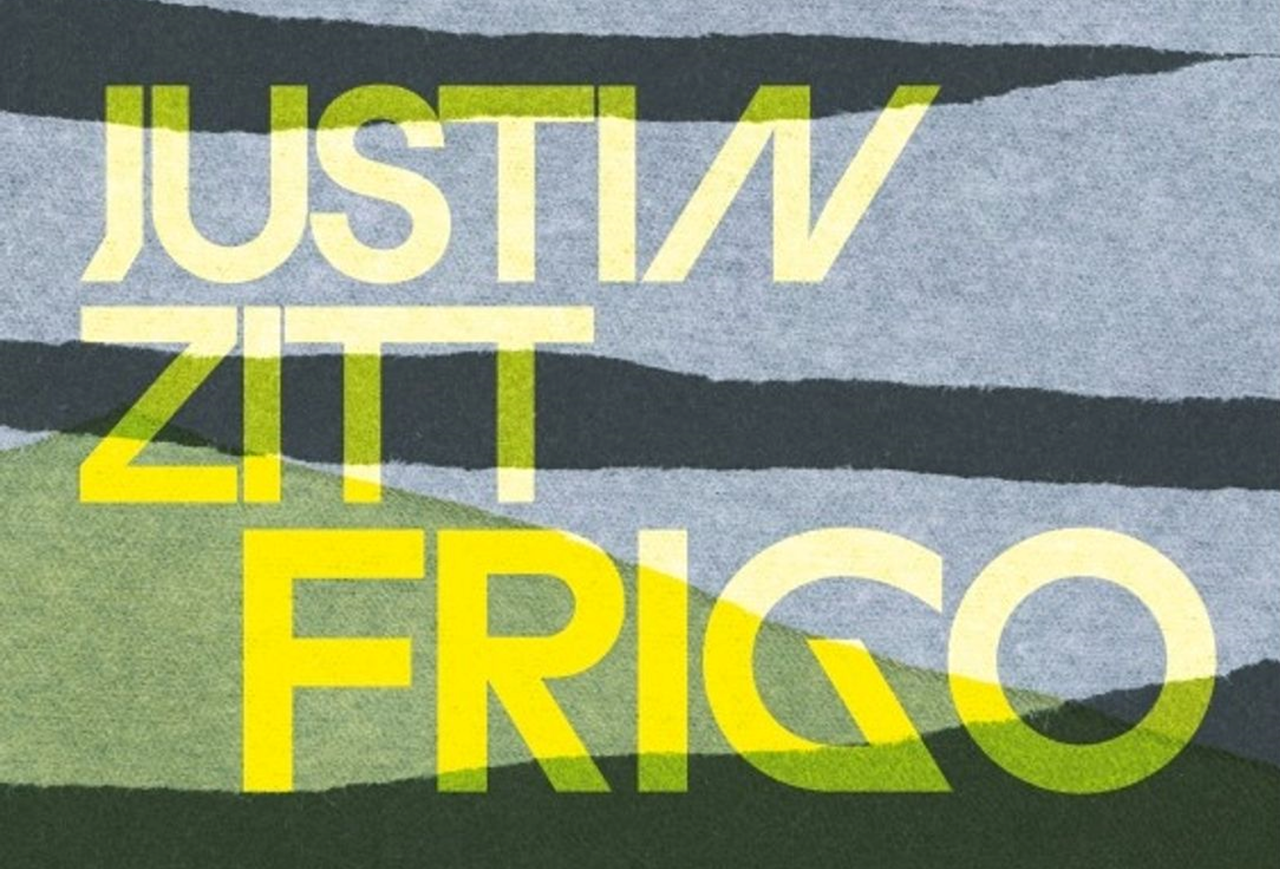
The contemporary jazz scene is not exactly lacking in piano trios, yet there are always musicians who manage to bring new aspects to this seemingly familiar format and amaze listeners with their original ideas. Justin Zitt is one such artist, presenting a multifaceted and richly colored debut with his trio Frigo. As pianist and composer, Zitt has his finger on the pulse of modern creative jazz, processing influences from Neue Musik and jazz with remarkable confidence, creating broad arcs without ever losing sight of his audience. His pieces shine with polyrhythmic structures and the multidimensionality of extended harmonies; despite their detailed sophistication, they always seem lively and convey an intensity that is fueled both intellectually and emotionally. “I want my music to reflect both approaches—on the one hand, a deep engagement with the subject of composition, and on the other, my intuitive approach,” explains Justin Zitt. His aim is to create a statement with carefully thought-out concepts, but also to make it tangible through emotional expression. The sources of inspiration that feed the young musician's creativity are correspondingly diverse. Penuel, for example, was created under the impression of a week-long working phase with New York star pianist Kris Davis. In contrast, Toleranzangst is the result of a substantial exploration of polyrhythms. "Basically, the piece is in 7/4 time, but 5/4, 9/8, and 11/8 are also combined. In the solos, we choose the meter freely because the overlaps of different measures make sense. We practiced for quite a long time to get it right," laughs the bandleader. Broadening the focus, Justin Zitt describes three groups that inspire his imagination as a composer and musician. These are the intricate rhythms and textures of Robert Landfermann's Neon Dilemma with Elias Stemeseder, the trio Punkt.Vrt.Plastik and Felix Hauptmann's band Percussion. Then there is European classical music from the end of the 19th and the 20th century, including Messiaen's harmonic ideas, Debussy's timbres, Alban Berg, and others. The basis for Divided Into One thus results from an engagement with Boulez's Notations. “The piece begins with 12 tones, the series is retained, but transferred into harmony,” explains Zitt. His third pillar is the tradition of American jazz, specifically the possibilities developed here for improvising over forms, from Bud Powell and Monk to Sullivan Fortner and Craig Taborn. Zitt got to know and appreciate his two bandmates at the Mannheim University of Music. “They are both extremely sensitive and listen very well. Our interaction is based on a great deal of trust, which gives me a lot of security,” says the pianist happily. For around four years the trio has been performing Zitt’s compositions, and since 2023 they have also been appearing on stages throughout Germany. “By the time we went into the studio in February 2024, we had already played almost all of the pieces live. Some of them had matured over several years, and we kept revising them in detail,” says Zitt. “That allowed us to work with variations in rhythm and harmony during the recordings.” The results are consistently impressive, sometimes even fascinating—whether through their diverse meters, including quintuplets, their shifting moods, their play of colors, or the band’s overarching creative drive. Justin Zitt (*June 2002) sat down at the piano at the age of five, and from the age of 10 he had a “very good teacher who didn't teach strictly classical music.” This is how Zitt came to jazz via gospel, without neglecting classical music. He played in his high school's big band, and when he wasn't playing the piano, he went skateboarding. Not an insignificant influence, Zitt grins: “Skating through the skate park is a bit like maneuvering through compositions—you go through the course and think things up.” The possibilities of the piano, its harmonic and tonal capabilities, inspire him today as much as they did back then. “The grand piano offers an enormous fantasy world in which you can come up with the most absurd things and build your own universe. It's a bit like the creator mode in video games: you can fly.” In 2022, Zitt was a member of the Gutenberg Jazz Collective at Jazz Campus Mainz. Here he played concerts with Ingrid Jensen, Kris Davis, Becca Stevens, Billy Hart, and others. The up-and-coming pianist also performed with Nils Landgren, Menzel Mutzke, Stefan Karl Schmid, Peter Gall, Wanja Slavin, and others on stages in Germany, France, and the UK. Zitt is currently a recipient of a scholarship from the Kunststiftung Baden-Württemberg and is pursuing his master's degree in Amsterdam, which includes an exchange partnership with the New School in New York. “I wanted to be in a city where a lot is happening,” he says, “there are about 5-6 concerts a day here, which is very inspiring.” Justin Zitt's subtle sense of humor is perhaps more evident between the notes in his music. But it is certainly evident in the band's name. “Frigo“ was created during a poker night,” says Zitt, “the word is a bit reminiscent of trio, so it seems fitting to me. It also means refrigerator in Spanish. I think it conveys a cool charm, a kind of veiled coolness, and therefore fits our music.” Whether Justin Zitt's music actually develops a kind of coolness is something everyone can decide for themselves. What is clear is that it has tremendous character. Zitt's rhythmic and melodic imagination, his stylistic vision, and the sound language he creates together with his fellow musicians make Frigo a surprising and impressive experience, allowing the trio's debut album to stand out from the vast field of jazz piano. - Norbert Krampf
Project
FRIGO
A colorful debut album in the piano trio format, shaped by modern creative jazz,
compositional depth, polyrhythmic structures and a strong personal voice.
Format
Piano trio
Label
UNIT Records
Release
October 2025